

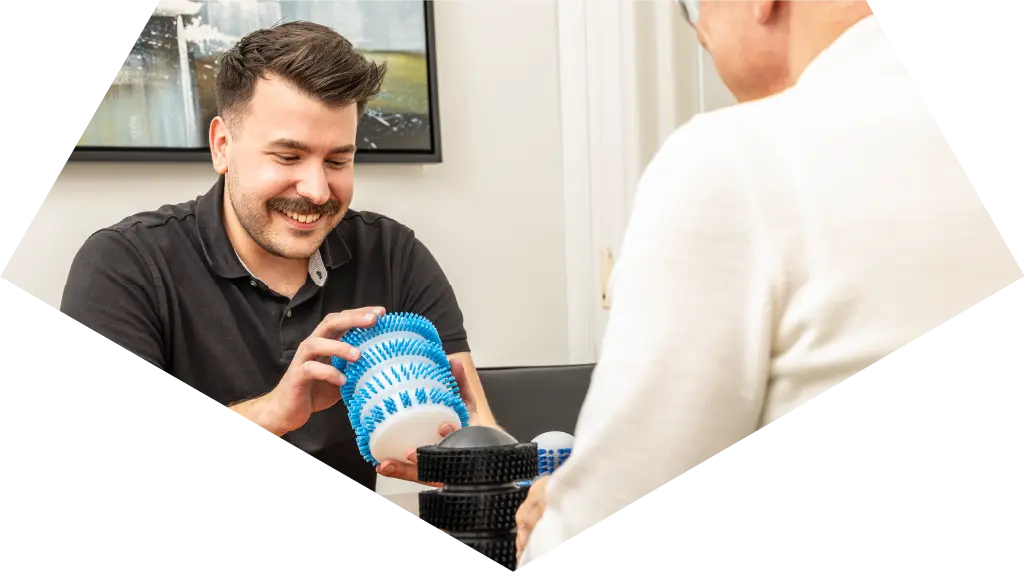

RATEC’s KBD-60 fluidisation nozzles are silicone fluidisation nozzles with Ø 60 mm in the standard version. They selectively loosen bulk material in silos and containers with air, preventing bridging and caking. They are mounted from the inside through a drilled hole in the silo or container wall and are the standard solution for temperatures up to 80°C. Like all RATEC silicone fluidisation nozzles, they are made entirely from FDA-compliant materials and are therefore also suitable for food and pharmaceuticals.
Table of Contents
How the fluidisation pad works
The round pad body has a flexible silicone sleeve. When air pressure is applied, the sleeve opens and the air escapes evenly into the bulk material. The product is loosened, i.e. fluidised, and flows evenly out of the cone again. When the air pressure is removed, the sleeve closes automatically so that no bulk material enters the pad.
Technical data KBD-60
| Feature | KBD-60 |
|---|---|
| Size | Ø 60 mm |
| Version | Standard version |
| Connection | 1/8″ |
| Material | Silicone / stainless steel 1.4305, FDA-compliant |
| Operating pressure | 1 to 6 bar |
| Temperature | −60°C to +80°C |
| Installation | Internal mounting via borehole |
| ATEX | compliant version on request |
The specified sizes are standard; other sizes and materials are available on request.
Your benefits
- Self-closing: no product in the pad.
- FDA-compliant: silicone and stainless steel, suitable for food and pharmaceuticals.
- Easy installation: from the inside via a borehole.
- Chemical-resistant: robust even with demanding products.
- Uniform material flow: no bridging, no blockages.
Other sizes and versions
The KBD-60 is also available in other sizes: KBD-30 and KBD-100. Function and design are the same; only the size changes. For other operating conditions, there is the KBD-60A external-mount version and the KBD-60H high-temperature version. You can find an overview of the sintered metal fluidisation nozzles under Fluidisation systems.
Which pad fits your silo?
Tell us the bulk material, installation location, and operating conditions. We will recommend the size, version, and number of pads.