


discover
Pigging
Systems
Fixed Pigging System Type: KFM
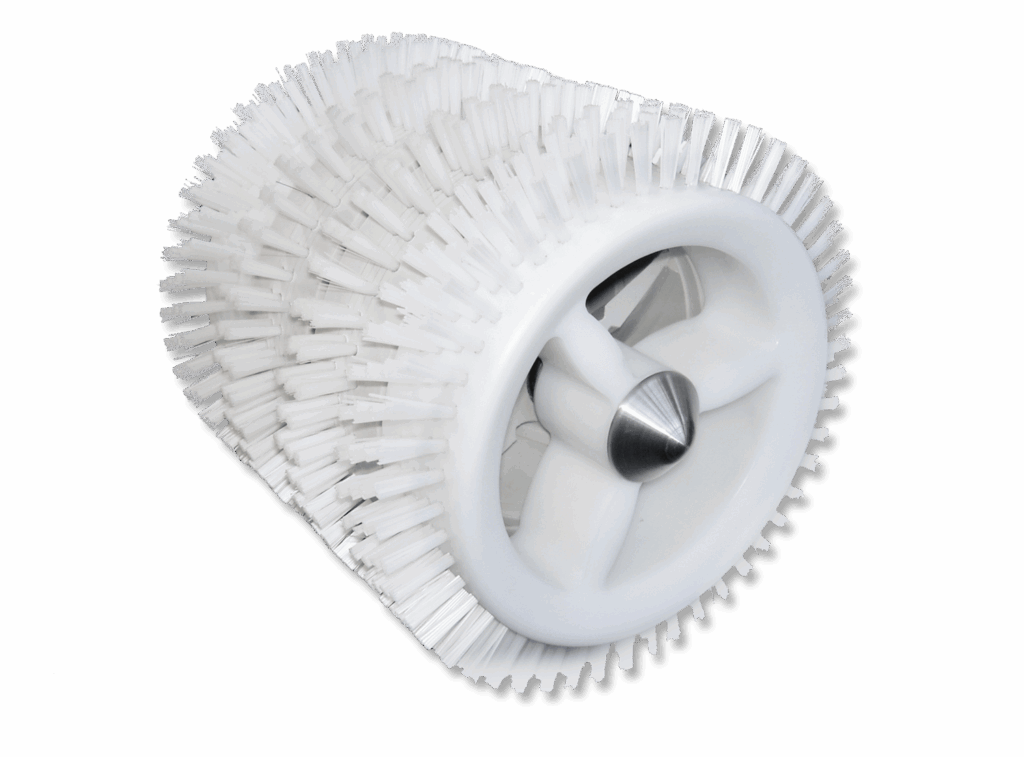
The fixed pig consists of a robust main body with firmly anchored bristles – depending on the application, made of
plastic, metal, natural fibers, or a combination thereof. It is precisely designed and manufactured for the respective pipeline and
cleaning task. Due to its compact, single-piece construction, the fixed pig is an economical and reliable solution for clearly defined cleaning requirements.
Modular Pigging System Type: KMM
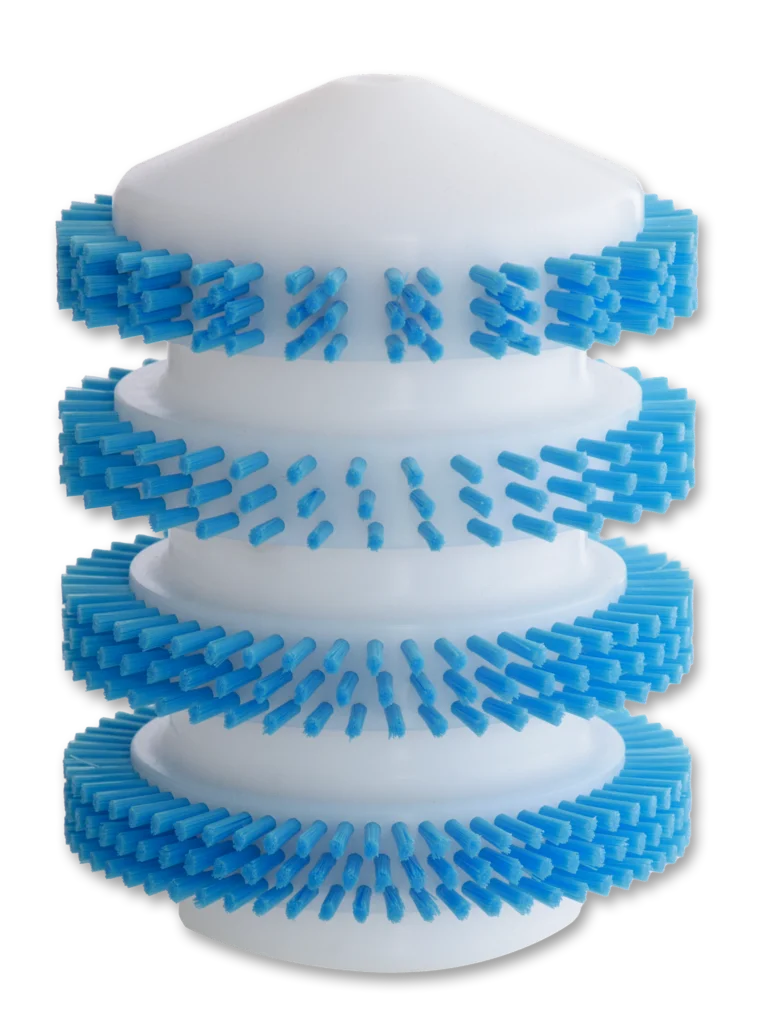
Modular pigs are brush pigs constructed from several individual brush discs on a common main body. The great advantage: individual brush discs can be replaced or combined in different orders – for example, coarse bristles first and fine bristles at the end – to precisely tailor the cleaning result to the respective pipeline. Worn brushes are simply replaced as spare parts, while the main body is retained. Thus, RATEC’s modular brush pig offers maximum flexibility with minimal maintenance.
Turbo Pigging System Type: KTM
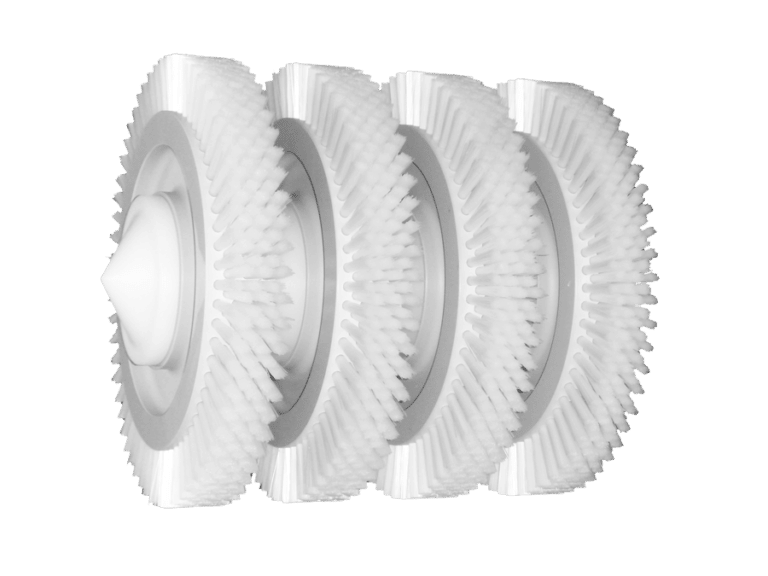
The RATEC Turbo pig combines four brush discs with different bristling: two rotatably mounted turbine wheels and two fixed-mounted fixed wheels. During the pigging operation, the airflow sets the turbine wheels into
counter-rotating motion – the result is a noticeably more thorough cleaning than with simple brush pigs. Like the modular pig, the Turbo pig is also constructed from individual parts and can be disassembled, cleaned, and repaired with spare parts if necessary – ideal for demanding cleaning tasks in larger nominal diameters.
Special Pigging System
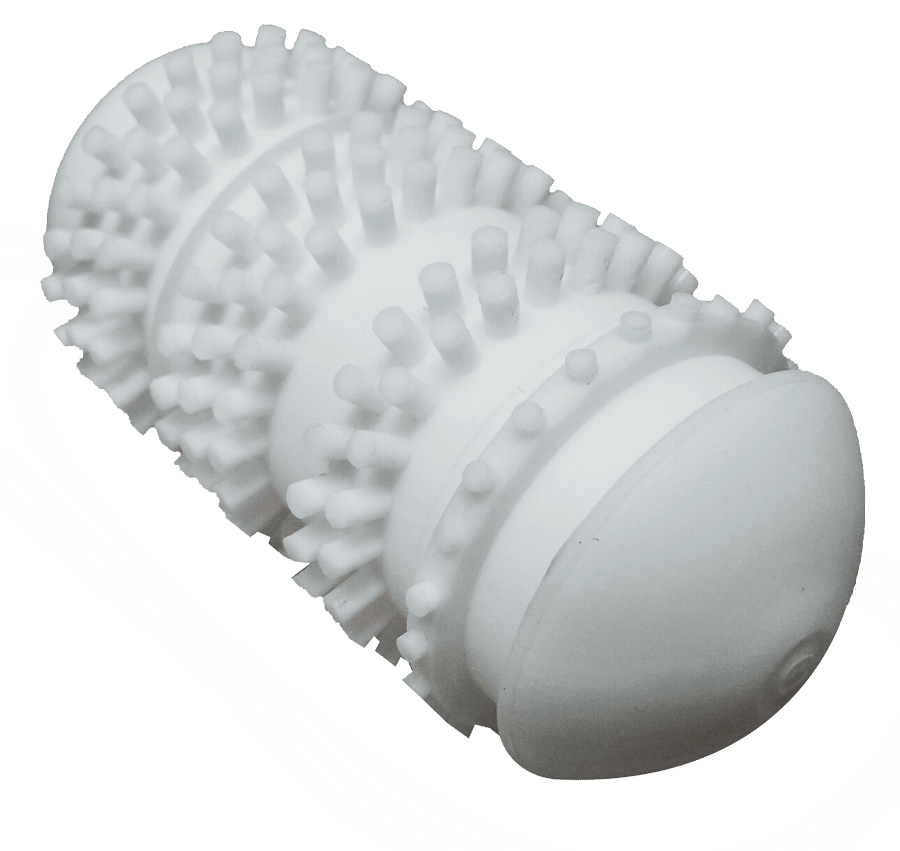
Not every cleaning task is standard – that’s why RATEC also offers special pigs for specific requirements: for drying, polishing, or cleaning hoses. For use in potentially explosive atmospheres, ATEX-compliant versions are available, and for the food industry, variants with FDA-compliant, product-contacting materials. The exact suitability is individually tailored to your application.
Transmitting and Receiving Stations
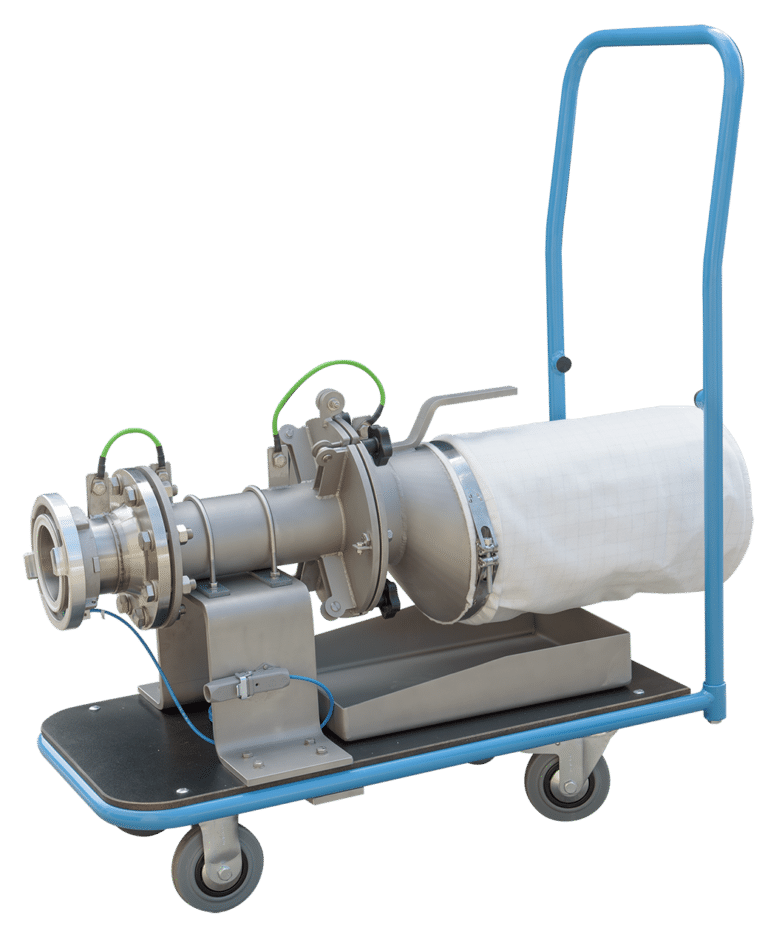
The pig launching and receiving station includes all components needed to safely insert the pig into the pipeline and remove it again at the end of the cleaning run. Depending on the conveying method—pressure or suction conveying—suitable launching options are used. At the end of the pig run, a gentle, cushioned
transfer ensures the pig is received safely without a hard impact and without damage.
Pigging Systems for Pneumatic Conveying
Efficient Cleaning and Maintenance of Pipeline Systems
Pigs are specialized cleaning and maintenance elements that play a central role in pneumatic conveying. They ensure product quality and provide efficient bulk material conveying by removing deposits, residues, and contaminants in pipelines. Our pigging systems significantly contribute to making the operation of pipeline systems safer and more cost-effective.
Applications of Pigging Systems
Pigs are used in almost all areas of pneumatic conveying in the bulk material industry. They are particularly important when:
- Consistently high product quality must be ensured,
- the fouling of pipelines is to be prevented,
- and contamination must be ruled out during a product change.
Why Pigging Systems from RATEC?
Our pigs offer numerous advantages that significantly reduce maintenance efforts:
- Cost-effective cleaning of pipelines in pneumatic conveying systems.
- Prevention of blockages and deposits in pipelines.
- Increased hygiene and product quality through regular cleaning.
Which conveying lines can be cleaned with pigs?
- Pressure conveying lines and suction conveying lines can both be cleaned with pigging systems.
Purpose and Benefits of Pigging
Pigging offers many advantages for pipeline systems:
- Removal of dust, angel hair, and other deposits from pipelines.
- Increase in the quality and hygiene standard of the conveyed product.
- Prevention of contamination and product carryover during product changes.
- Prevention of pipeline blockages and fouling in the lines.
Industries that can use pigging systems
Pigs are indispensable in many industries:
- Plastics industry
- Building materials industry
- Food industry
Characteristics and Variants of Our Pigs
Our pigs are available in various sizes, materials, and shapes, suitable for diverse applications. The pigging systems range from simple pig balls to complex turbo pigs, which are specially adapted to the requirements of your pipeline systems.
Components of a Pigging System
A complete pigging system consists of several components:
- Pig launching station (manual, semi-automated, or fully automated)
- Propellant gas unit (air supply for pneumatic conveying)
- Pig receiving station (manual, semi-automated, or fully automated with pig return)
- Disposal unit for contaminants (not always required)
- Control unit (not always required)
Advantages of Pigging Systems
The use of pigs offers numerous advantages:
- Reduction of downtime and maintenance costs through efficient cleaning without dismantling pipes.
- Constant conveying performance and operating conditions over the entire lifespan of the plant.
- Increased safety, as the risk of hazardous material residues in pipelines is minimized.
- Environmentally friendly, as pigs operate without the use of chemicals or cleaning agents.
Types of Pigs
We offer a variety of pigs for different requirements:
- Pig balls
- Fixed pigs
- Modular pigs
- Turbo pigs
Special Pig Designs
For special requirements, we also offer:
- Pigs for ATEX areas (explosion-proof pigs)
- FDA-compliant pigs for use in the food industry
- Detectable pigs
Handling and Operation of Pigging Systems
The operation of our pigging systems is simple and enables fast and efficient cleaning without extensive downtime. Our launching and receiving stations guarantee effortless insertion and removal of the pig.
When is pigging not possible?
There are certain conditions under which pigging is not feasible:
- Pipelines with large diameter changes
- Internal installations in the pipe
- Hard encrustations in the lines
- Excessively large product quantities in the pipe
For existing systems that are not piggable, we offer customized solutions and modifications to adapt the systems to your requirements.
Frequently asked questions about pigging systems
What is a pigging system and how does it work in pneumatic conveying?
A pigging system cleans pneumatic conveying lines from the inside by sending a pig – a brush-equipped cleaning body – through the pipeline, driven by the propellant gas. The pig is safely inserted at a launching station, travels through the line and removes dust, angel hair, deposits and residues from the pipe wall, and is then received gently and without damage at a receiving station. A complete RATEC pigging system consists of a propellant gas unit, a pig launching station and a pig receiving station, plus – where required – a disposal unit for contaminants and a control unit for automated operation. Several passes per cleaning cycle are recommended.
Why use pigging instead of blowing out the line, wash granulate or water-air cleaning?
Because pigging cleans the pipeline without dismantling it and without chemicals, water or cleaning agents. Blowing out the line at the end of the conveying cycle removes loose product, but not dust on the pipe walls or residues in dead zones such as gaps in flange connections or at diverter valves. Wash granulate has an unsatisfactory cleaning effect and causes significant disposal costs. A water-air mixture cleans well, but is costly, time- and energy-intensive: all components must be washable, and the next batch can only start once the line has dried. RATEC pigging systems reduce downtime and maintenance costs and keep conveying performance constant over the entire service life of the plant.
Can pigging be used in both pressure and suction conveying lines?
Yes – RATEC pigging systems clean pressure and suction conveying lines alike. The launching option is matched to the conveying method, and launching and receiving stations are also available as a diverter. At the end of the run, a cushioned end position receives the pig without a hard impact and without damage. Stations are available manual, semi-automated or fully automated including pig return.
Which types of pigs does RATEC offer?
RATEC offers fixed pigs (type KFM), modular pigs (type KMM), turbo pigs (type KTM), special pigs and pig balls. The fixed pig has a one-piece body with firmly anchored bristles made of plastic, metal, natural fibres or a combination – the economical solution for clearly defined cleaning tasks from DN 32. The modular pig is built from replaceable brush discs that can be combined freely, for example coarse bristles at the front to loosen deposits and fine bristles at the rear for a clean finish; worn discs are replaced as spare parts (from DN 32). The turbo pig combines two fixed wheels with two turbine wheels that the airflow sets into counter-rotation, for noticeably more thorough cleaning in larger lines from DN 125. Fixed, modular and turbo pigs run at 1–3 m/s with propellant gas temperatures from +5 °C to +80 °C.
Are RATEC pigging systems available in ATEX- and FDA-compliant versions?
Yes – almost all RATEC pigs are optionally available in an ATEX-compliant version for potentially explosive atmospheres and with FDA-compliant, product-contacting materials for the food industry. For special requirements, RATEC also supplies detectable pigs, high-temperature pigs and special pigs for drying, polishing or cleaning hoses. The right version is defined individually for the conveyed material and the application.
When is pigging not possible – and can existing lines be made piggable?
Pigging is not possible in pipelines with large diameter changes, internal installations in the pipe, hard encrustations or excessively large product quantities in the pipe. For existing systems that are not piggable, RATEC offers customised solutions and modifications. A review of the line – nominal size, routing, bends, diverters and flange connections – shows whether and how a conversion makes sense.
What does a pigging system cost?
The cost of a pigging system depends on the specific conveying line and is quoted individually – there is no flat price. The main cost factors are the nominal size and routing of the line (length, bends, diverters, flange connections), the pig type (fixed, modular, turbo or special pig), the level of automation of the stations (manual, semi-automated or fully automated with pig return), an optional control and disposal unit, and special requirements such as ATEX, FDA or high temperatures. In operation, pigging lowers costs through less downtime and maintenance, no chemicals or wash granulate to buy and dispose of, and – with modular and turbo pigs – inexpensive replacement of worn brushes instead of a complete new pig.
How do I find the right pigging system for my plant?
The fastest way is a short needs assessment with five key points: nominal size and routing of the line (DN, length, bends, diverters, flange connections), conveying method (pressure or suction), material and deposits (product, dust, angel hair, adhesions), special requirements (ATEX, FDA, temperature, product changes) and the desired level of automation. On this basis RATEC advises you and designs the right pig and the right station for your plant – for the plastics, building materials, food and pharmaceutical industries. Contact RATEC for a non-binding consultation