


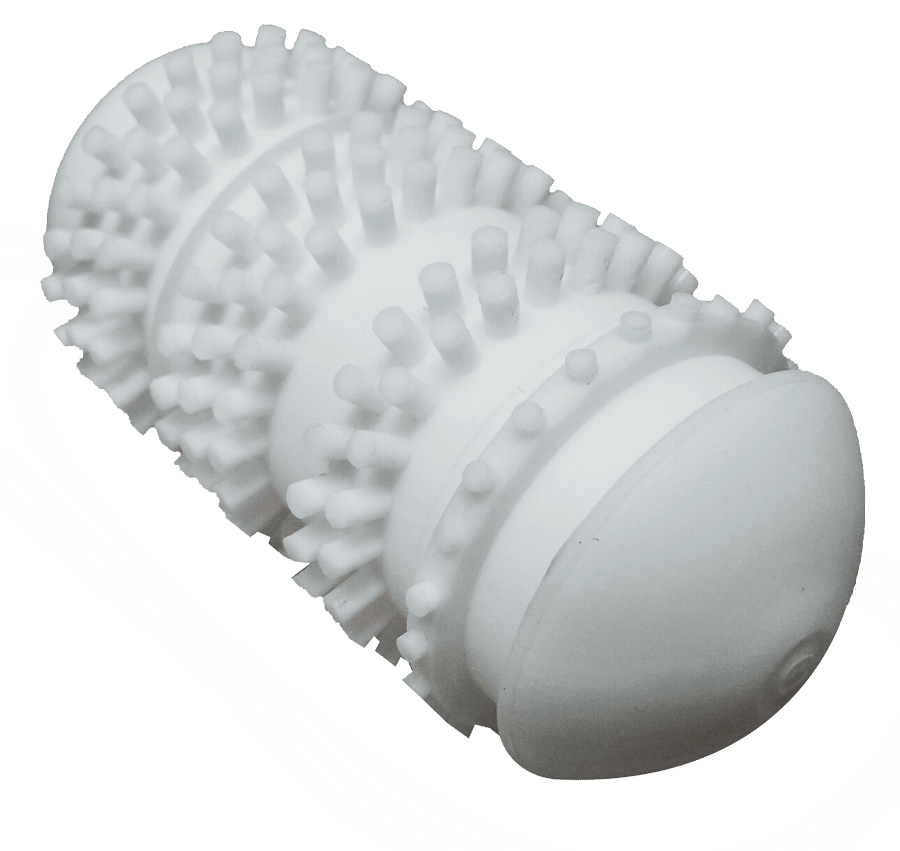
RATEC special pigs are designed for cleaning tasks that standard pigs cannot handle: drying and polishing pipelines, cleaning hoses, detectable pigs and pigs for high temperatures. They are complemented by purpose-built pigging balls for a wide range of applications. We select the right special pig for your plant based on your specific application, and ATEX- and FDA-compliant versions are available on request. RATEC develops and manufactures every special pig in-house in St. Veit an der Glan.
Table of Contents
When a special pig is the right choice
Our fixed pigs, modular pigs and turbo pigs cover most cleaning tasks in pneumatic conveying lines. Some tasks, however, go beyond cleaning alone, or the conditions in the line do not suit a standard pig. That is where a special pig comes in, for example when a line has to be dry after cleaning, when hoses rather than pipes need to be cleaned, or when temperatures exceed the standard range.
Special pigs can also be combined with standard pigs. First a brush pig loosens the deposits, then a special pig dries or polishes the line. We tailor the sequence of pigging runs to your process and your product changeovers.
Special pigs at a glance
Pigs for drying
After wet cleaning, for example with a water-air mixture, moisture remains in the line. A drying pig absorbs this residual moisture so the line is ready for the next product changeover sooner.<br/>
Pigs for polishing
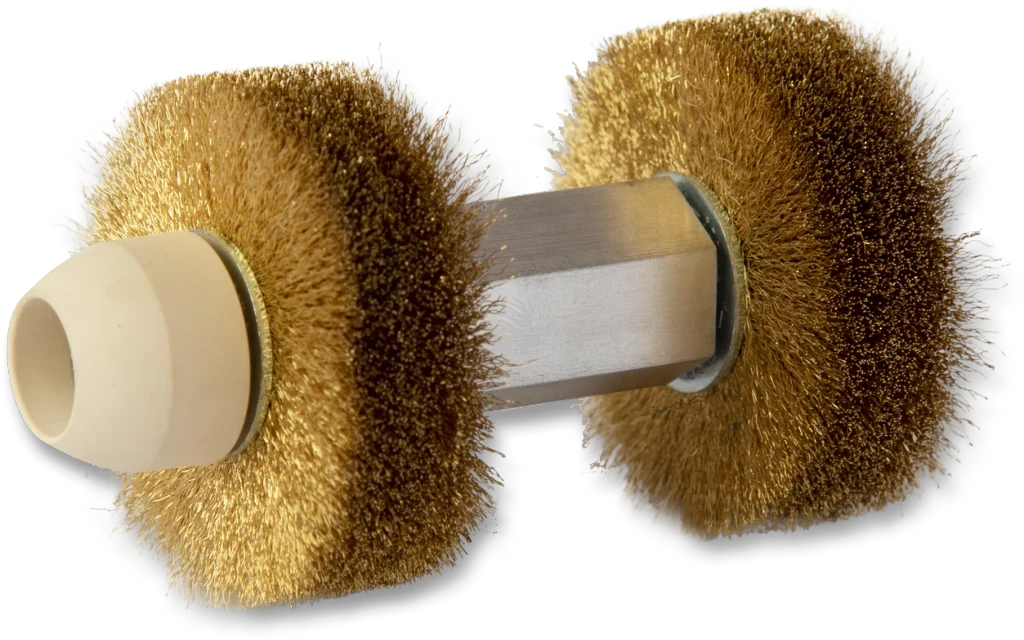
Polishing pigs treat the inner surfaces of the pipe. Smooth inner surfaces give deposits less to cling to and are easier to keep clean during subsequent pigging runs.
Pigs for hoses
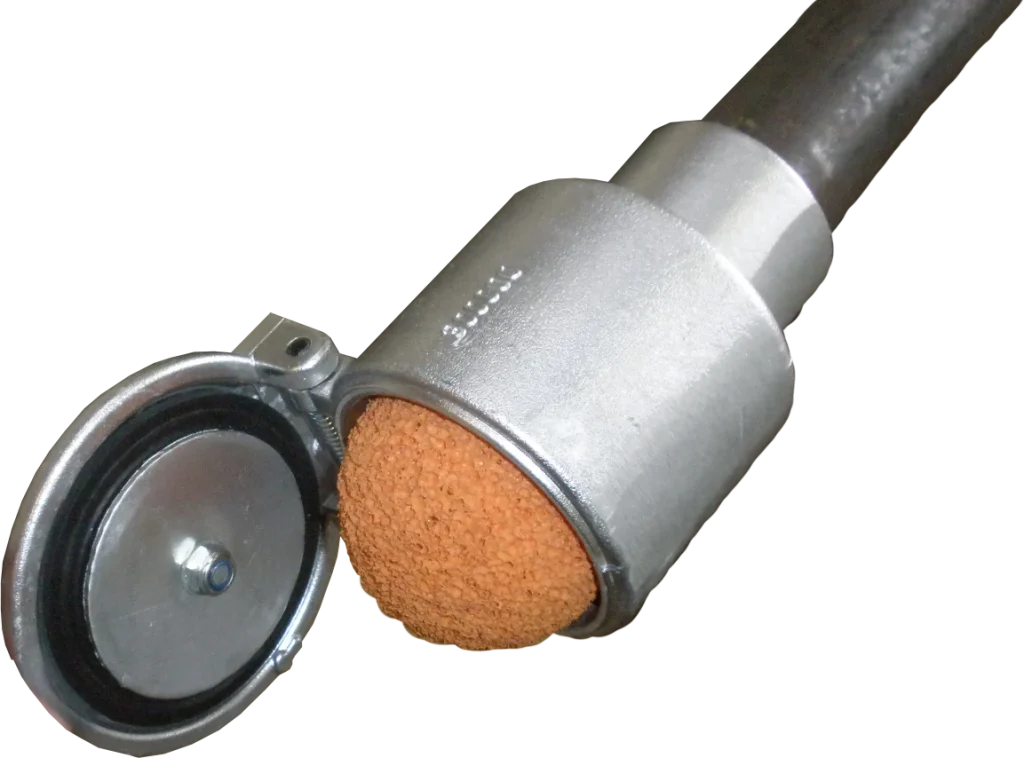
Hoses behave differently from rigid pipelines: they are flexible and differ in inner diameter and material. For hose cleaning, we offer dedicated special pigs designed for these conditions.
Detectable pigs
Detectable pigs can be identified in the line. This lets you track whether and where a pig has arrived, which is essential for automated pigging systems and for long or branched lines.
High-temperature pigs
Standard pigs are designed for propellant gas temperatures from +5 °C to +80 °C. For higher temperatures, we offer high-temperature pigs made from materials matched to the conditions in your line.<br/>
Pig balls
In addition to brush pigs, we develop pigging balls for a wide range of applications. Together with you, we determine the right design and material.
ATEX- and FDA-compliant versions
For potentially explosive atmospheres, RATEC supplies special pigs in ATEX-compliant versions, based on Directive 2014/34/EU in the EU. For the food industry, versions with FDA-compliant product-contact materials are available. We always select the material according to your requirements.
Part of a complete pigging system
Special pigs are also launched into the line via a launching station and received at the end in a receiving station with cushioned deceleration. RATEC supplies matching launching and receiving stations in manual, semi-automated or fully automated versions with pig return, including as a diverter. If your existing line is not piggable, for example due to large changes in diameter, internal fittings or hard encrustations, we develop suitable modifications.
What matters during design
- Task: cleaning, drying, polishing or detection.
- Line: pipe or hose, nominal diameter, length, bends and diverters.
- Operating conditions: conveying method, temperature and conveyed material.
- Special requirements: ATEX, FDA, product changeovers or automation.
Customized by RATEC
RATEC is at home in the bulk materials sector and manufactures components for bulk handling plants at its own plant in Carinthia, certified to ISO 9001, EN 1090-1 and ISO 3834-2. Years of experience in bulk materials handling have taught us what matters in conveying lines. Every special pig is built to your specifications, with individual advice and design. RATEC pigs are used mainly in the plastics, building materials, food and pharmaceutical industries. You can find an overview of all types under Pigs.
Does your cleaning task require more than a standard pig?
Briefly describe your line, your conveyed material and what the pig needs to do. We will get back to you with a specific proposed solution.