

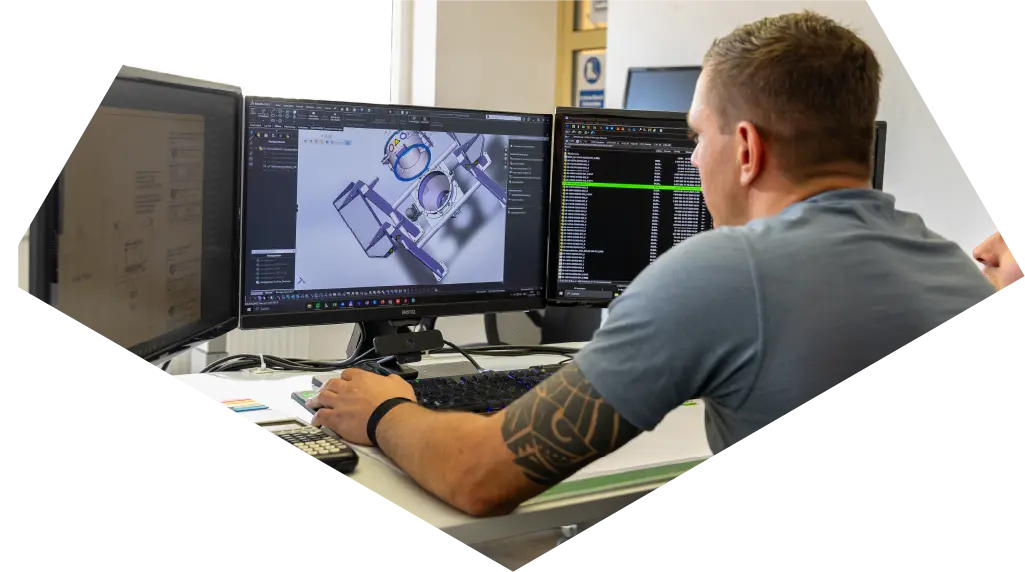

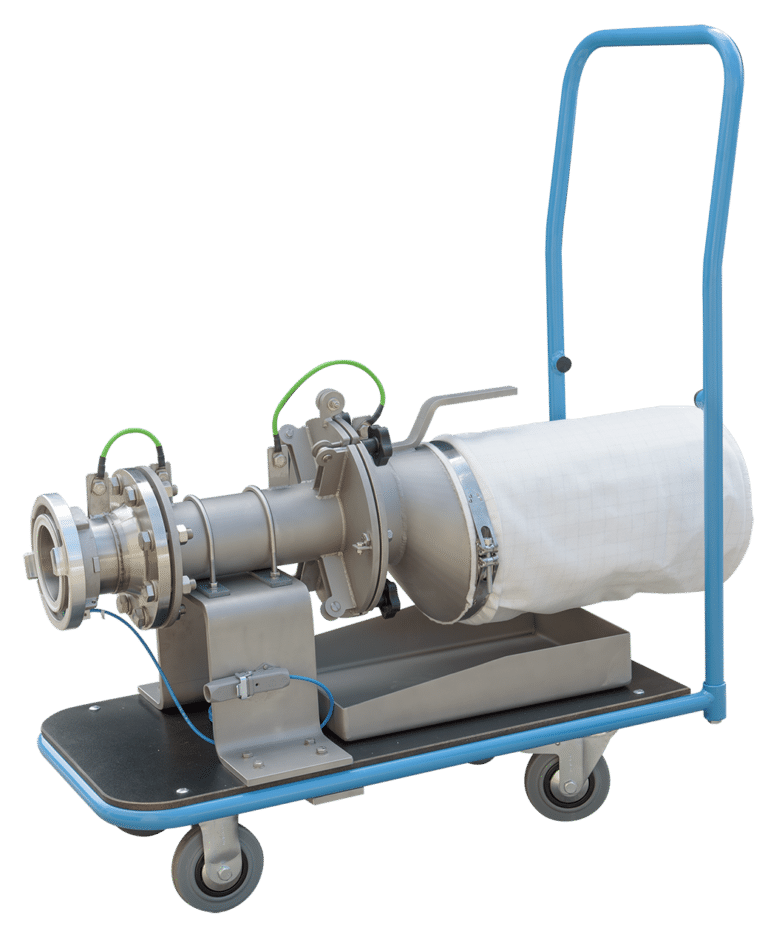
RATEC’s pig launching and receiving stations comprise all components necessary to safely insert a pig into the pipeline and remove it again at the end of the cleaning run. Suitable launching options are available for pressure and suction conveying, and a cushioned transfer protects the pig from hard impact at the end. The stations are available manually, semi-automatically, or fully automatically with a pig return system, and also as a diverter. RATEC develops and manufactures every station in-house in St. Veit an der Glan.
Table of Contents
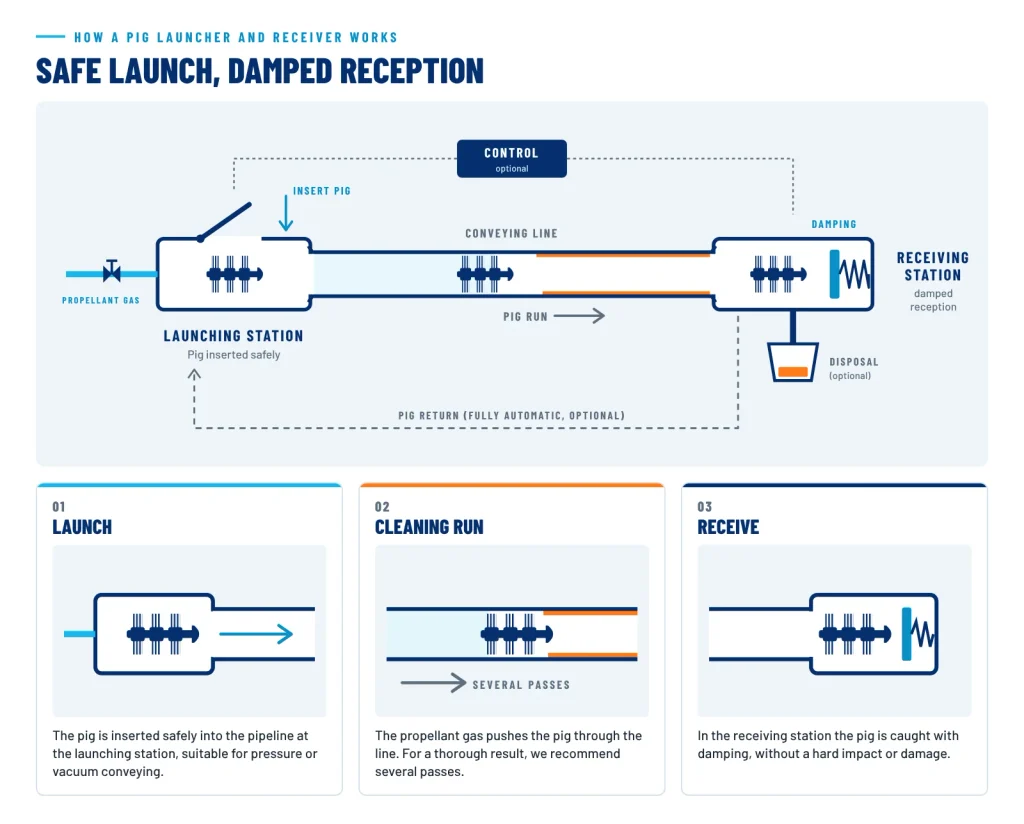
How a Pig Launching and Receiving Station Works
- Insertion: The pig is safely inserted into the pipeline at the launching station.
- Cleaning Run: The propellant gas pushes the pig through the conveying line. For a thorough result, we recommend several passes.
- Retrieval: At the receiving station, the pig is gently and safely received and removed at the end.
Components of a Pigging System
A complete pigging system consists of several components. Which ones you need depends on your system and the desired level of automation:
- Propellant Gas Unit: the air supply for pneumatic conveying that pushes the pig through the line.
- Pig Launching Station: inserts the pig into the line, manually, semi-automatically, or fully automatically.
- Pig Receiving Station: receives the pig at the end of the line, fully automatically with pig return system if desired.
- Disposal Unit: collects the discharged contaminants, not required in every system.
- Control Unit: for automated operation, also not always required.
Insertion for Pressure and Suction Conveying
Pneumatic conveying lines operate either with positive pressure or negative pressure. This determines how the pig is safely inserted into the line. RATEC launching stations are therefore adapted to your system’s conveying method, so that pressure and suction conveying lines can be pigged equally effectively.
Cushioned Transfer at the End of the Line
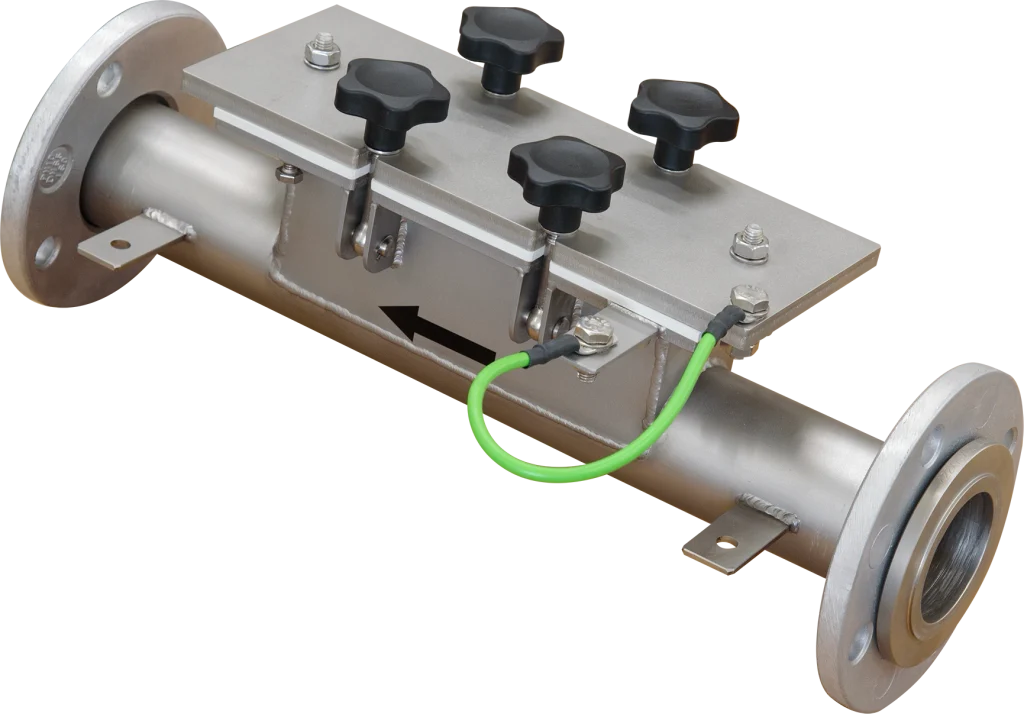
At the end of the cleaning run, the pig has gained speed. If it hits a fixed end unbraked, both the pig and the station can be damaged. RATEC receiving stations therefore provide a cushioned transfer into a soft end position. This protects the brushes, extends the lifespan of the pigs, and ensures quiet, safe operation.
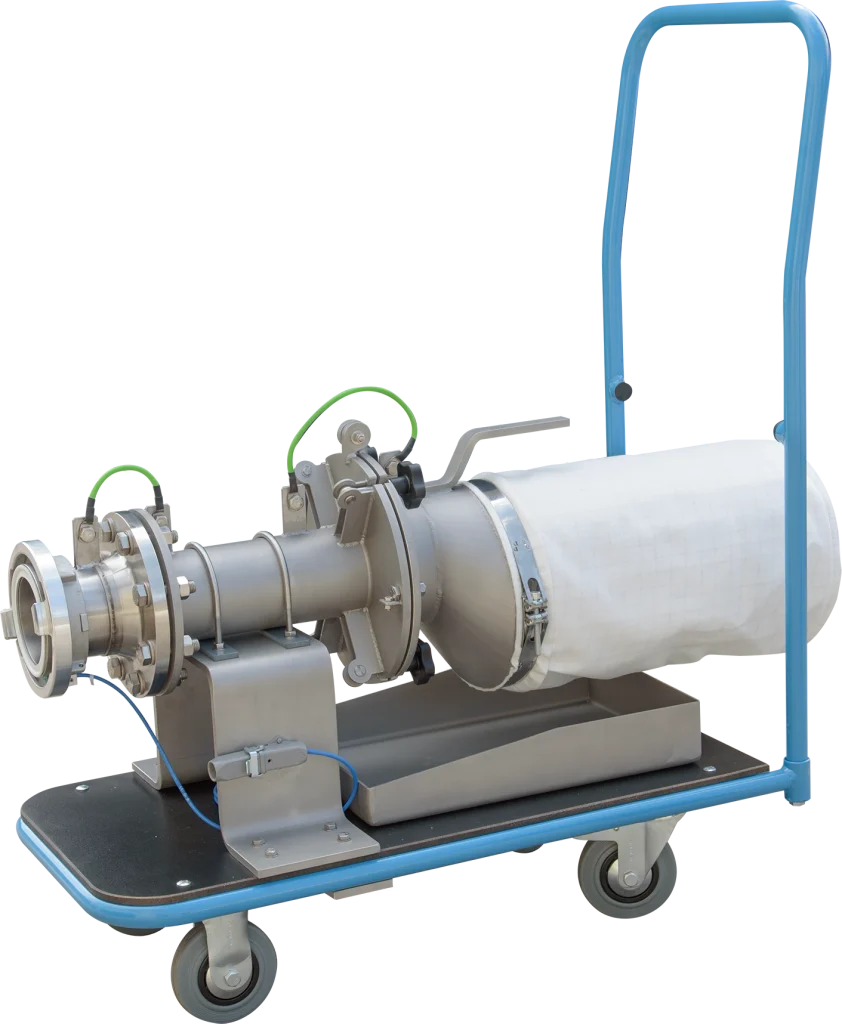
Manual, Semi-Automatic, or Fully Automatic
- Manual: Manual insertion and removal of the pig, simple and without control, ideal for infrequent cleaning.
- Semi-Automatic: individual steps run automatically, such as insertion or transfer.
- Fully Automatic: including pig return system. After the run, the pig is automatically returned to the launching station and is ready for the next pass, without any human intervention.
Launching and receiving stations are also available as a diverter, if the station is to be integrated into an existing pipeline layout.
Your benefits
- Safe insertion for pressure or suction conveying
- Gentle transfer through cushioned end position
- Simple, fast operation without long downtimes
- Precisely matched to pipeline and process
Suitable for All RATEC Pigs
The stations are matched to the pigs running in your line, whether fixed pigs, modular pigs, turbo pigs, or special pigs. Nominal diameter and dimensions are based on your line. Other sizes and materials can be manufactured according to your specifications; ATEX and FDA compliant versions are available upon request.
Making Existing Systems Pig-Capable
Not every line can be pigged easily. Large diameter jumps, internal fittings, hard encrustations, and excessively large product quantities in the line are challenging. For existing systems that are not pig-capable, we offer tailor-made solutions and modifications to ensure that the launching and receiving station and the pig work together reliably.
What matters during design
- Nominal diameter and line routing: DN, length, bends, diverters, and flange connections.
- Conveying method: pressure or suction conveying.
- Conveyed material and deposits: product, dust, angel hair, adhesions.
- Special requirements: ATEX, FDA, temperature, product change.
- Level of automation: manual, semi-automatic, or fully automatic with pig return system.
Customized by RATEC
RATEC is at home in the bulk material sector and manufactures components for bulk material systems in its own plant in Carinthia, certified according to ISO 9001, EN 1090-1, and ISO 3834-2. From many years of experience in bulk material handling, we know what matters in conveying lines. Pig and station come from a single source and are coordinated with each other. An overview of all designs can be found under Pigs.
Are You Planning a Pigging System?
Briefly describe your line, conveying method, and desired level of automation. We will get back to you with a concrete solution proposal.