



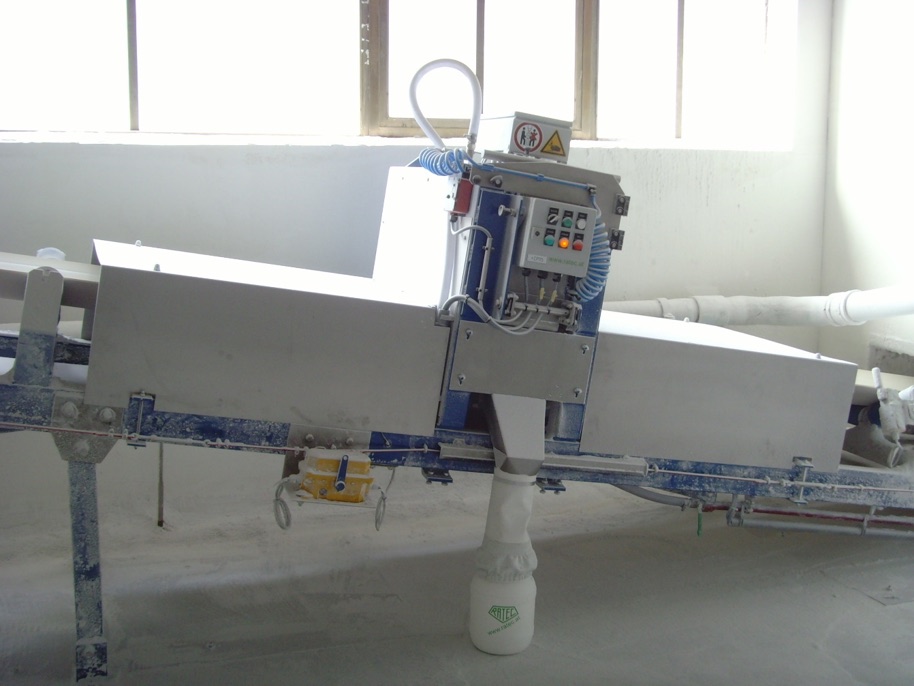
A belt sampler extracts samples from bulk material transported on a conveyor belt. This happens automatically and while the belt is running. You receive regular samples for quality control, process monitoring, or laboratory analysis without anyone having to handle the running belt. RATEC GmbH from St. Veit an der Glan develops and manufactures belt samplers in-house and designs each system for your bulk material, your conveyor belt, and your process.
What is a Belt Sampler?
A belt sampler is a sampler that is permanently mounted on a belt conveyor. It takes a defined amount of material from the belt at specified intervals and deposits it into a sample container.
The conveyor belt is a good location for sampling because the entire material flow passes through one point here. At the same time, bulk material segregates during conveying: fine particles tend to settle at the bottom of the belt, while coarse pieces often move to the top or the edge. A manual sample from the surface therefore often shows a distorted picture. A belt sampler takes each sample at the same location, with the same motion, and in the same quantity. This makes your analysis results comparable and traceable.
How the RATEC Belt Sampler Works
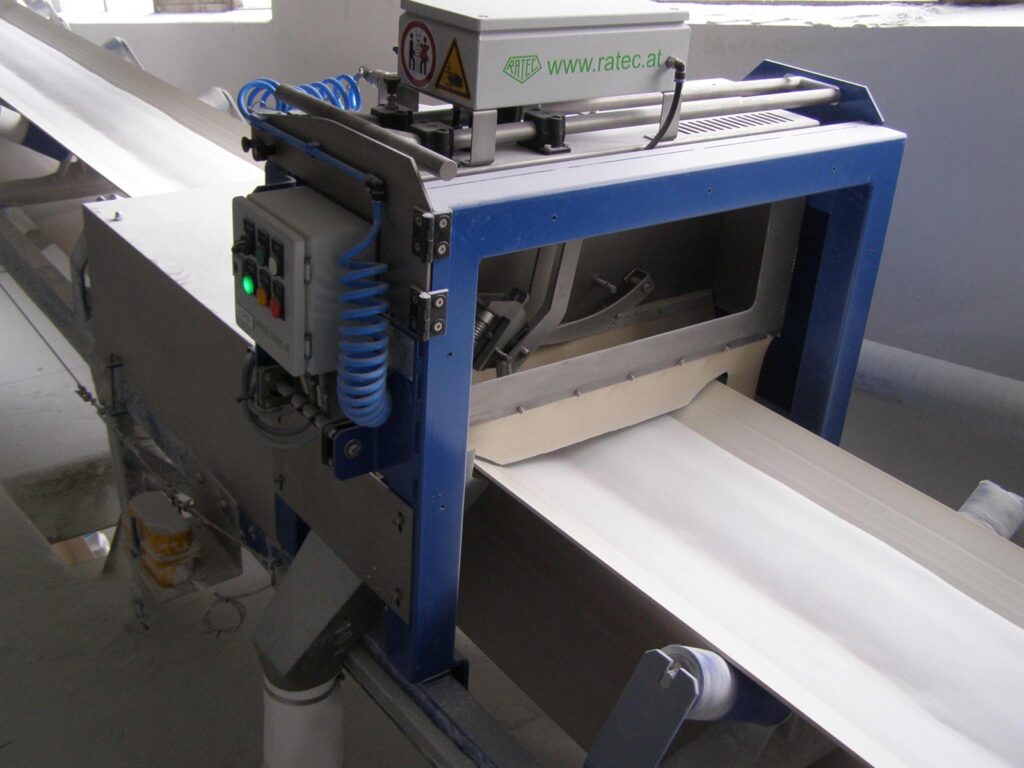
The core of the RATEC Belt Sampler is a swivel arm. The process in three steps:
- Swinging in: At the specified time, the arm swings into the product stream on the conveyor belt.
- Extracting and transferring: The arm collects a defined sample quantity and transfers it to the sample container in its end position.
- Parking: Afterwards, the arm returns to its park position outside the product stream. The belt continues to run undisturbed until the next sample.
The swivel arm is driven electrically or pneumatically. The electric version can be easily integrated into existing production lines. The pneumatic version reports its position back to the control system. Which drive is more suitable depends on your process and the available energy supply.
Advantages of Automated Sampling on the Conveyor Belt
- Consistent Samples: Same location, same quantity, same process. Fluctuations in analysis come from the product, not from the sampling.
- Sampling During Operation: The conveyor belt does not need to be stopped for sampling.
- Increased Safety for Your Personnel: No one has to reach into running belts or deflection pulleys.
- Minimal Interference with Material Flow: The swivel arm is only in the product stream during extraction.
- Automated to the Lab: Together with a sample collector and sample transport, the entire sampling process runs without manual labor.
What Matters in Design
Whether a sample is meaningful is decided during planning. We clarify these points with you before construction:
- Bulk Material: Grain size and largest piece, flowability, moisture, temperature, abrasiveness, and tendency to stick.
- Conveyor Belt: Belt width, belt speed, flat or troughed belt, conveying capacity, and available installation space.
- Sample Quantity and Frequency: How much material per sample, how often, and whether sampling is time- or quantity-dependent.
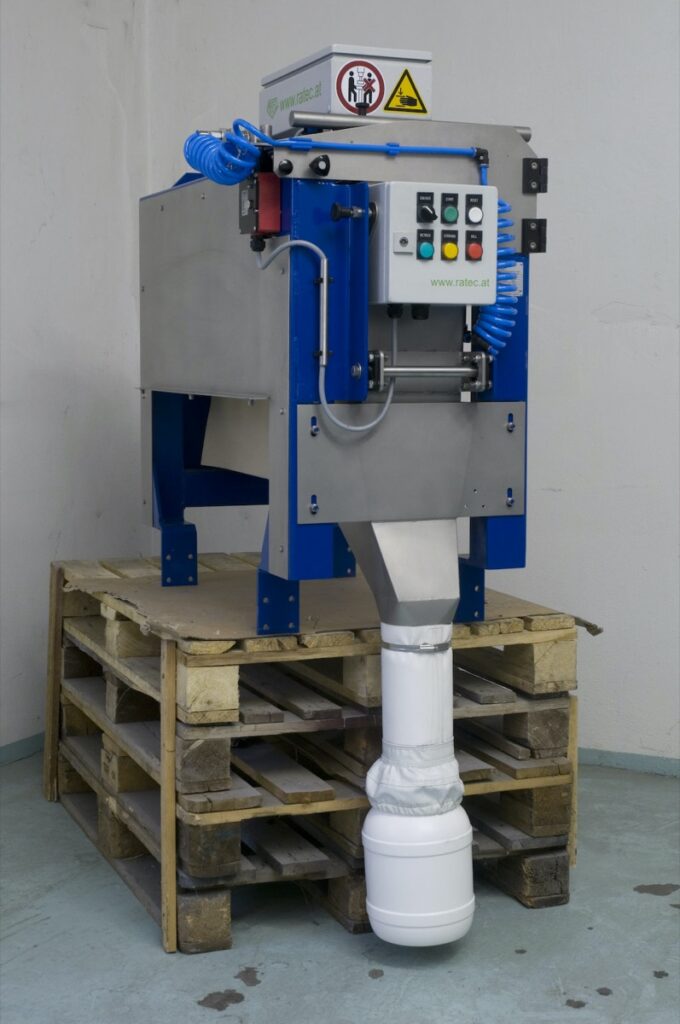
- Sample Collection: Bottle, bag, container, or sample collector, plus the question of how samples get to the laboratory.
- Environment and Regulations: Explosion protection (ATEX), food or pharmaceutical requirements (FDA), dust exposure.
For some raw materials, there are specific sampling standards, such as ISO 3082 for iron ore or ISO 13909 for coal and coke. These require, among other things, that a sample covers the entire cross-section of the material flow. If such a standard or an internal test regulation applies to your product, please inform us when making your inquiry. We will take it into account in the design.
Where Belt Samplers are Used
A belt sampler is worthwhile wherever bulk material runs over belt conveyors and needs to be regularly inspected: in goods receipt, before storage in the silo, after mixers or dryers, and during loading. RATEC samplers are used in these industries, among others:
- Heavy and Fine Chemicals
- Mineral Industry
- Food Industry
- Petrochemical Industry
- Pharmaceutical Industry
- Rubber and Carbon Black Industry
- Feed and Seed
- Wood and Paper Industry
- Waste and Recycling
Custom-Designed by RATEC: Engineering and Manufacturing from a Single Source
RATEC is at home in the bulk material sector. We plan, design, and manufacture components for bulk material systems in our own production facility in St. Veit an der Glan in Carinthia. We do not offer off-the-shelf belt samplers. Each system is tailored to your application:
- Designed for your bulk material, your conveyor belt, and your sample quantity
- Electric or pneumatic drive, suitable for your control system
- ATEX-compliant design for explosion-hazardous areas
- FDA-compliant, product-contacting materials for food and pharma
- Sample container as desired: bottle, bag, or container
- Extension with a sample collector for up to 48 sample containers
- Sample transport to the lab via pneumatic tube or pneumatic conveying
- Special samplers if a standard solution does not fit
You get everything from a single point of contact: consultation, design, manufacturing, and, if desired, connection to your existing system. An overview of all types can be found on our Samplers page.
Are you planning sampling on a conveyor belt?
Briefly describe your bulk material and your system to us. We will get back to you with a concrete solution proposal for your belt sampler.