

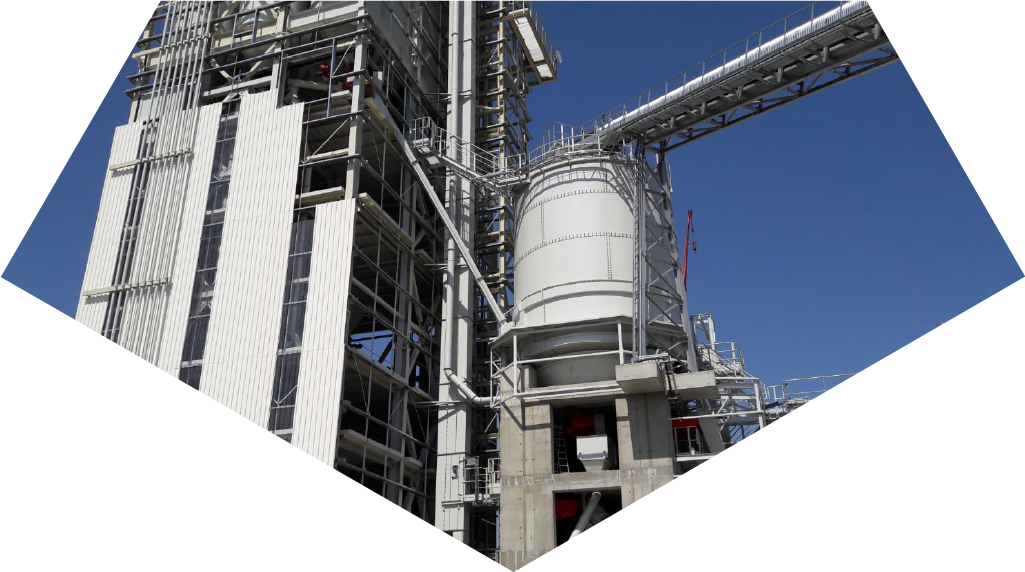

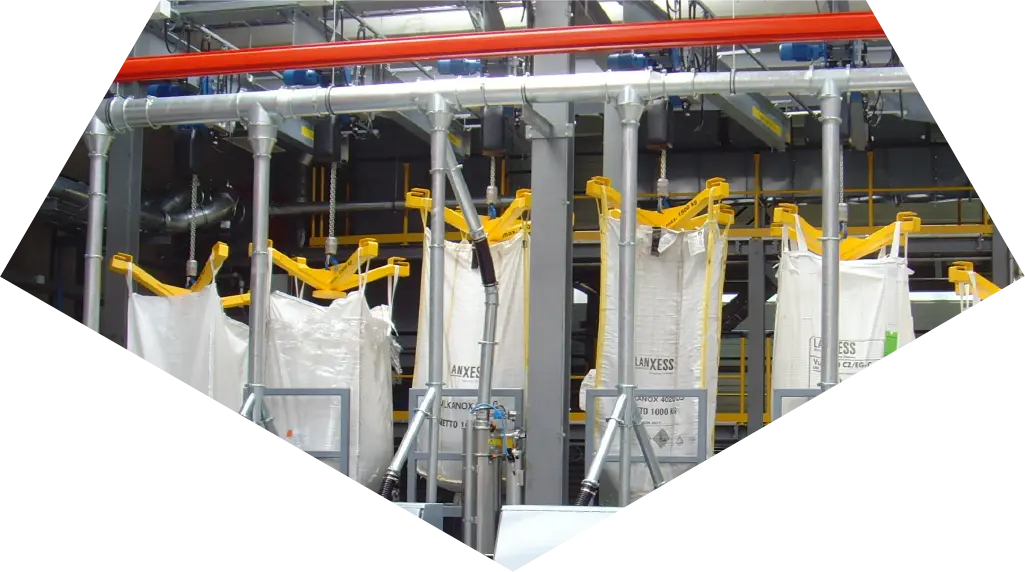
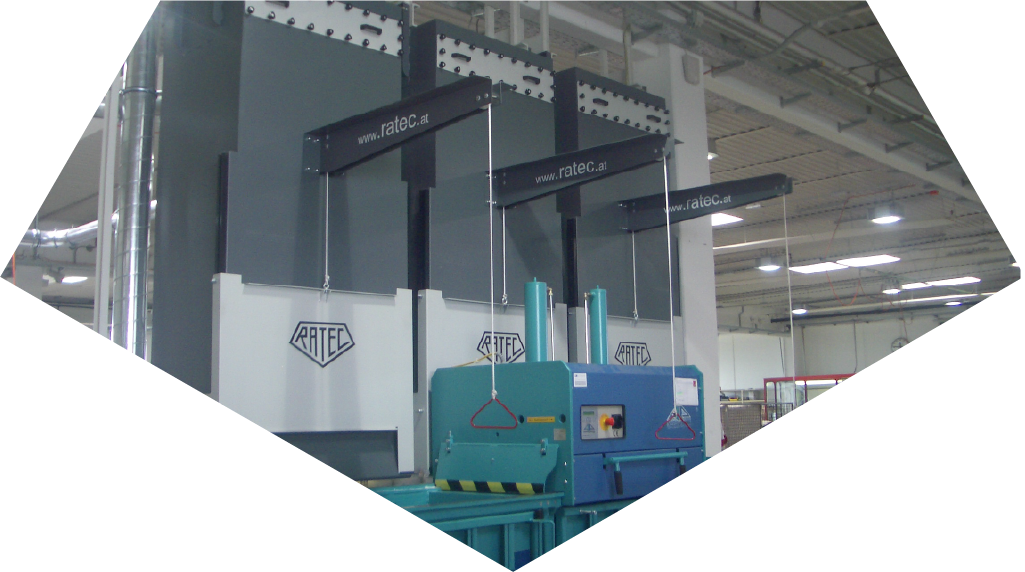
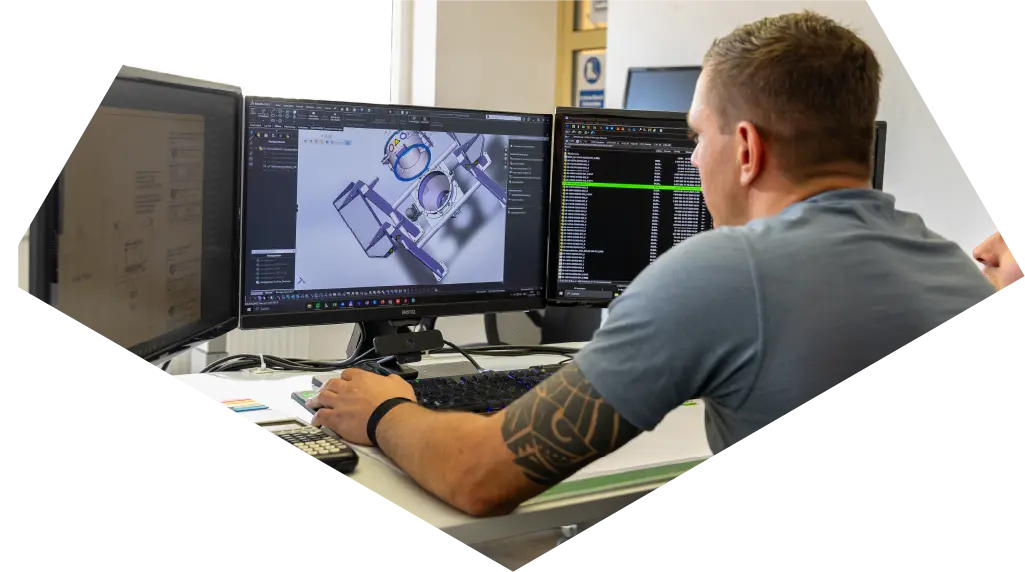


RATEC damped pipe clamps give conveying lines an elastic support that catches shocks, vibration and noise right at the clamp, before they reach the structure. This protects the pipe, flanges and steel structure from the constantly changing loads that occur above all in pneumatic conveying. An elastomer insert in the clamp and a cylindrical damping element take care of the damping, used as a fixed or sliding support depending on the application. We design every damped pipe clamp individually for your line, with an ATEX-compliant version available on request.
Table of Contents
Why conveying lines need damped supports
A pneumatic conveying line is constantly in motion. The conveyed material strikes the pipe wall in bends, and pressure fluctuations and pulsating flow make the line vibrate. If the line is fixed rigidly, it passes these forces straight on to the steel structure. The result is noise, loosened connections and, over time, damage to the pipe, flanges and supporting structure.
A damped pipe clamp interrupts this path. It absorbs the forces, dampens them and passes only a much smaller share on to the steel structure.
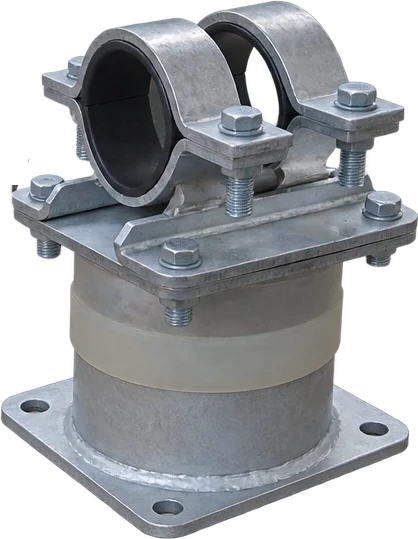
How damped pipe clamps work
The pipe clamp surrounds the pipe with an elastomer insert. Beneath it sits a cylindrical damping element that takes up movement from every direction: axial, lateral and vertical. Because holding and damping are combined in one component, no additional structures are needed. This saves space, especially on tight pipe racks and in plants with many parallel lines.
We match the behaviour to your line through the damping hardness. Softer damping decouples vibration more strongly, while harder damping holds the line more firmly in position.
Key technical data
| Feature | Damped Pipe Clamp |
|---|---|
| Function | absorbs forces from all directions |
| Principle | pipe clamp with elastomer insert on a cylindrical damping element |
| Application | as a fixed or sliding support |
| Damping | various models and damping hardness levels |
| Effect | reduces shocks, noise and vibration |
| Versions | ATEX on request |
| Dimensions | designed individually for each pipeline |
The damped pipe clamp shown in the picture is just one example from a customer project. Every RATEC pipe support is built to the requirements of the respective customer, so design, materials and dimensions vary from project to project.
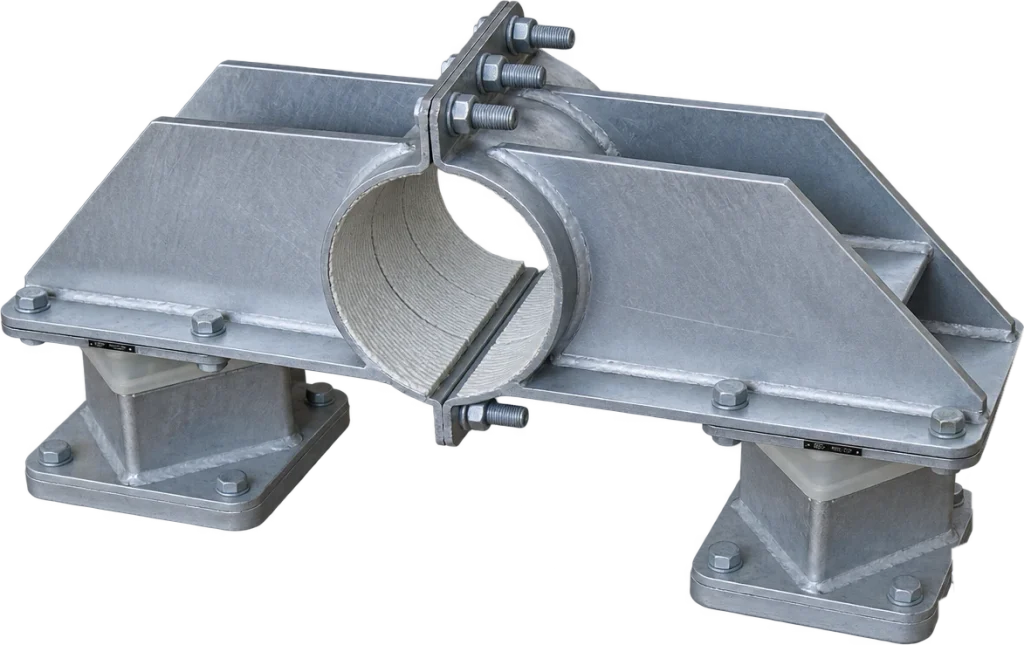
Part of a complete pipe support system
We choose the model, damping hardness and use as a fixed or sliding support to suit your conveying line and the vibrations that occur.
- Stainless steel pipe clamps with fixed point: hold the line rigidly in position.
- Guide supports: allow axial movement and prevent lateral displacement.
- Sliding supports: allow movement both axially and laterally.
- Pendulum supports: support riser lines and compensate for settlement.
What matters in the design
- Conveying line: diameter, wall thickness, weight, routing.
- Conveying: conveyed material, conveying method, typical vibrations and shocks.
- Support point: use as a fixed or sliding support.
- Environment: temperature, hazardous area, connection to the steel structure.
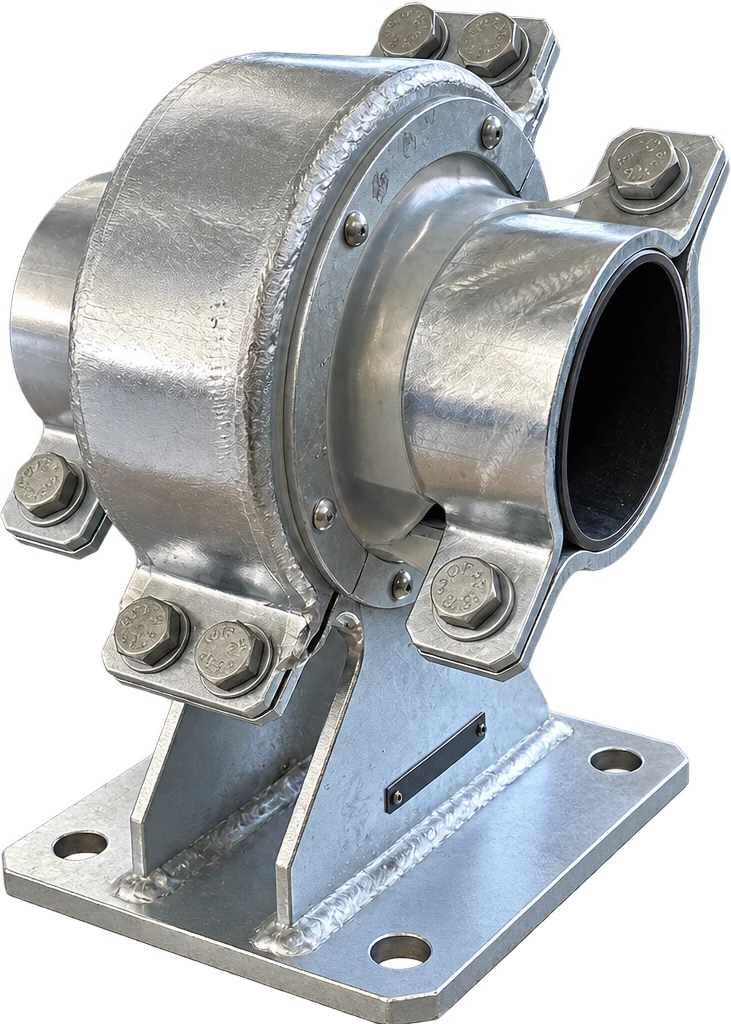
Custom-built by RATEC
RATEC is at home in the bulk material sector and knows pneumatic conveying lines from firsthand experience. We manufacture in-house at our plant in Carinthia, certified to ISO 9001, EN 1090-1 and ISO 3834-2. Every damped pipe clamp is custom-made for your line; the photos on this page show examples from customer projects. You can find an overview of all designs under Pipe Clamps.
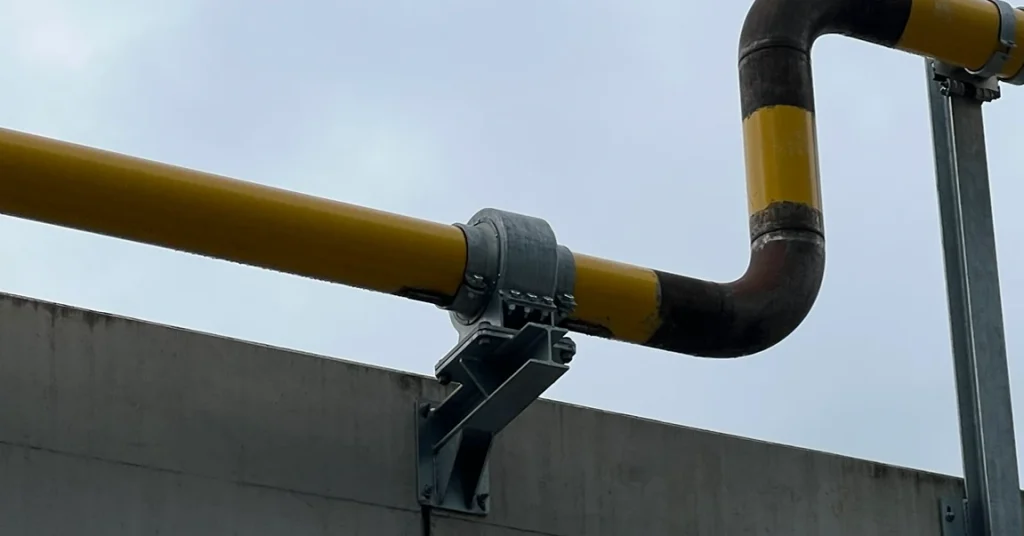
Is your conveying line vibrating or too loud?
Briefly describe your line, the conveyed material and the problem. We’ll get back to you with a concrete proposal.