

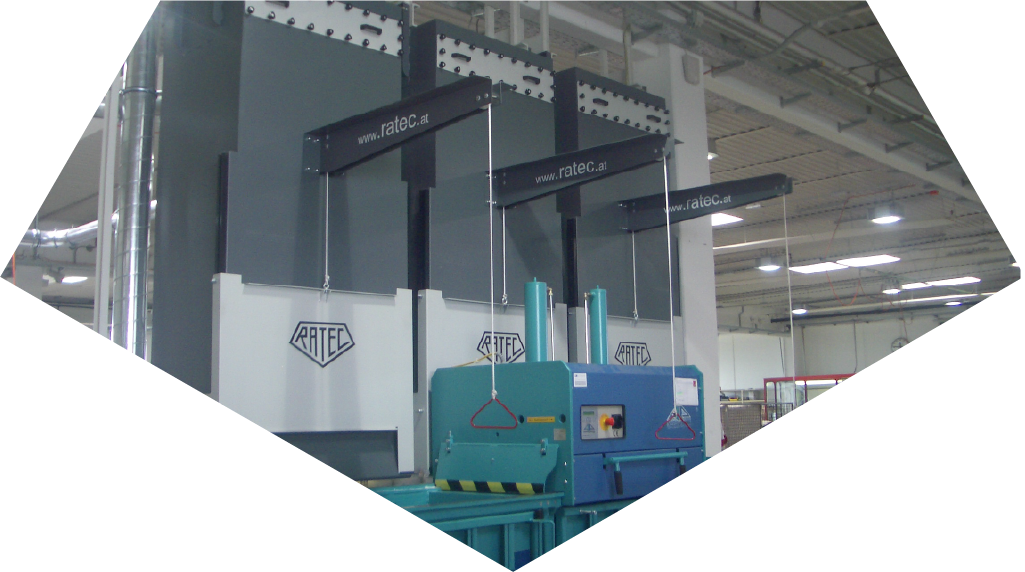
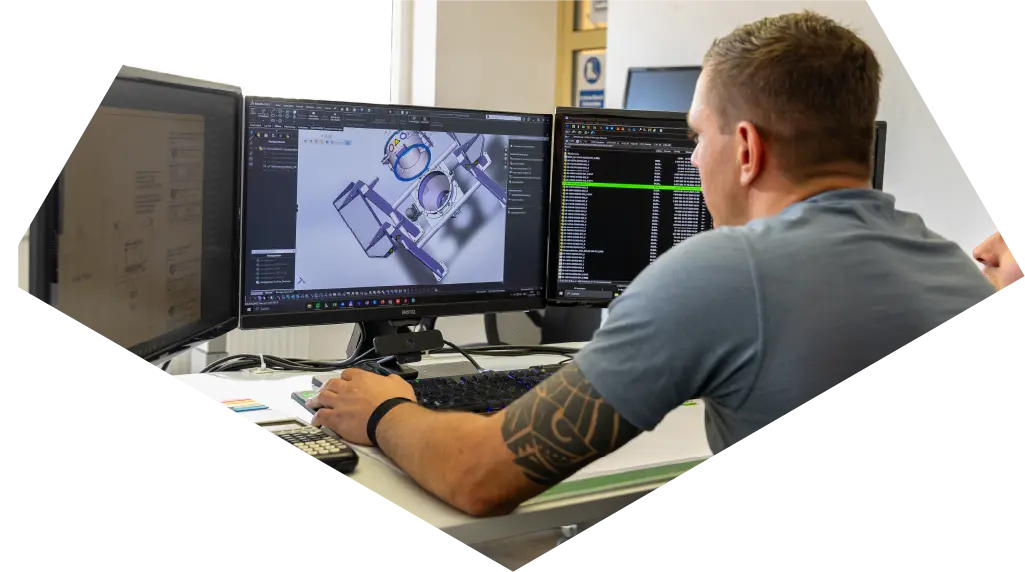


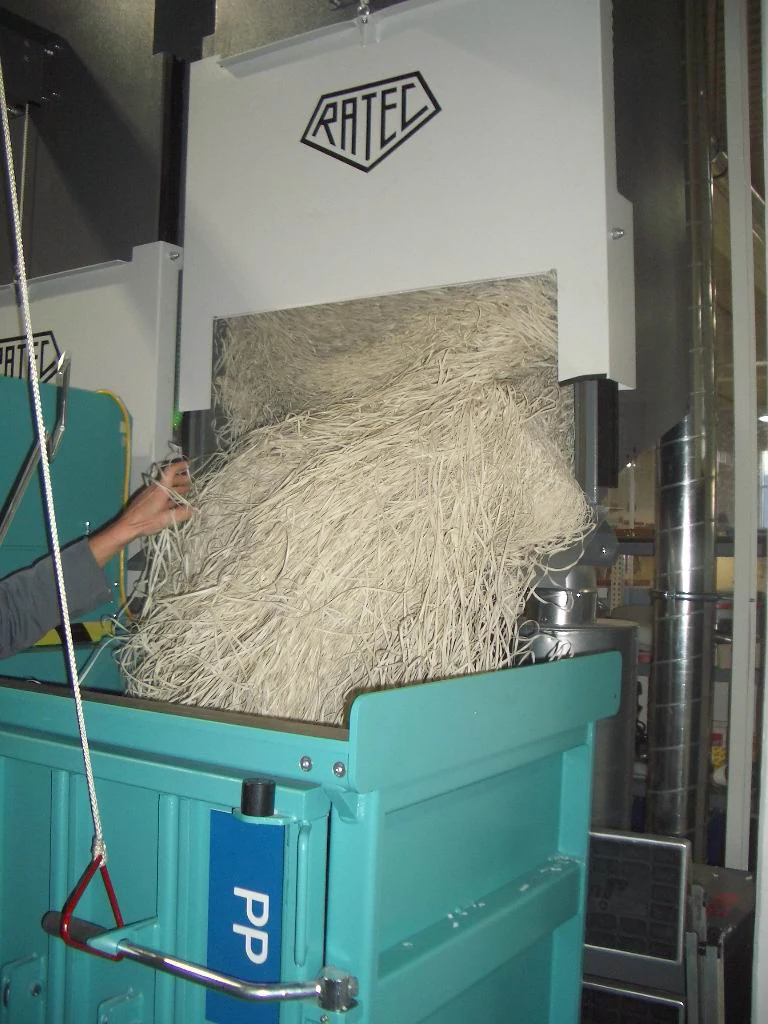
The plastic chip extraction system from RATEC removes continuous plastic chips directly at the lathe before they can wrap around the tool and workpiece. Each machine has its own separation container, ensuring that chips are collected separately by type and compacted directly in a baling press. We planned, designed, and manufactured the system at our own plant in St. Veit an der Glan.
Table of Contents
The Task
Turning plastic produces long, continuous chips. These wrap around the tool and workpiece, hindering processing and otherwise requiring manual removal. The requirement was for a stationary system for three lathes that reliably extracts the chips, separates them by type, and simplifies disposal. Since plastic chips build up electrostatic charges, safe dissipation of static electricity was also required.
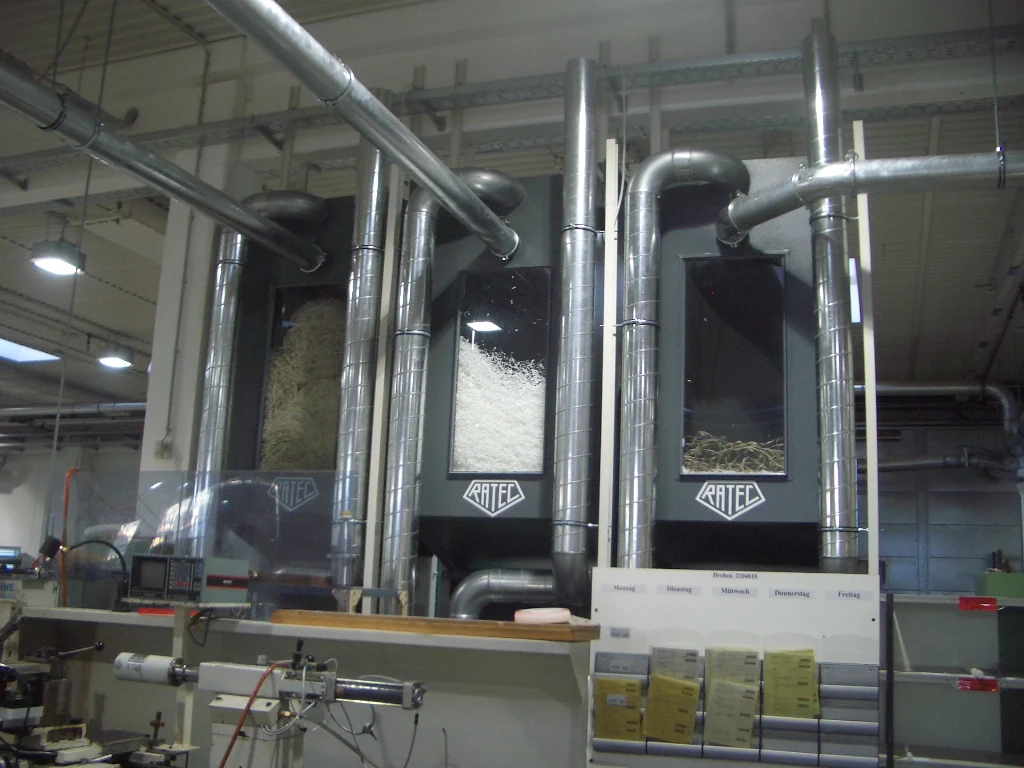
How the Extraction Process Works
- Capture: The chips are extracted directly at the interface between the workpiece and the tool.
- Separation: Each machine feeds into its own separation container; the chips remain separated by type.
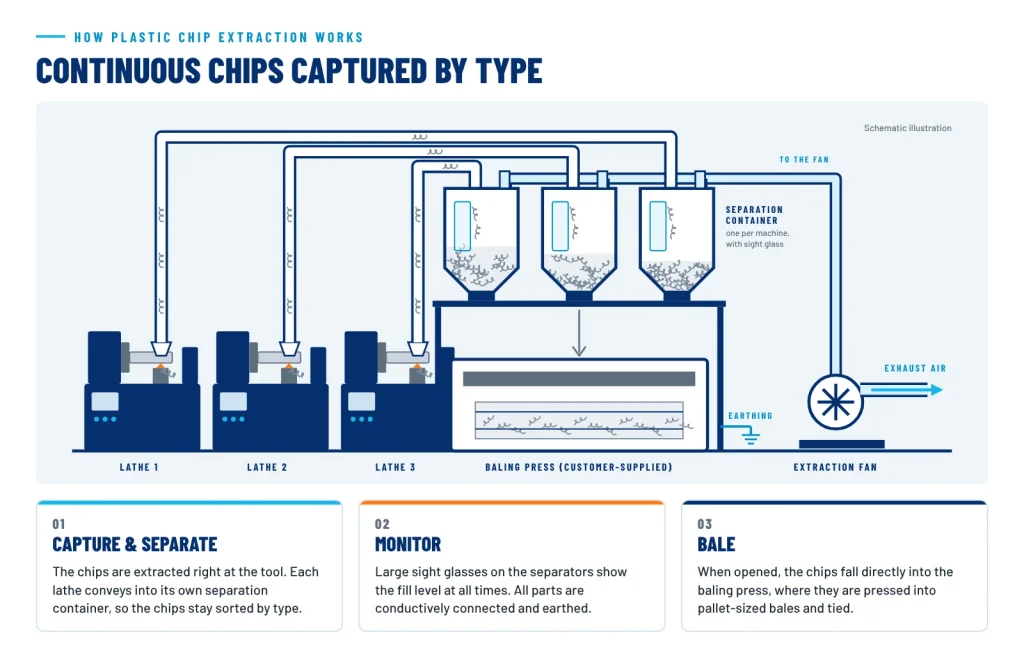
- Monitoring: Large viewing windows show the fill level at all times.
- Baling: When the separator is opened, the chips fall directly into the on-site baling press, where they are pressed into pallet-sized bales and strapped.
Focus on Safety
During the design phase, we paid special attention to the dissipation of static electricity. All parts of the system are conductively interconnected. Large grounding lugs allow for connection to the on-site main grounding system. This ensures that electrostatic charges are safely discharged.
Technical specifications
| Feature | Plastic Chip Extraction |
|---|---|
| Material | Continuous plastic chips |
| Machines | Three lathes |
| Extraction | One extraction fan, stationary system |
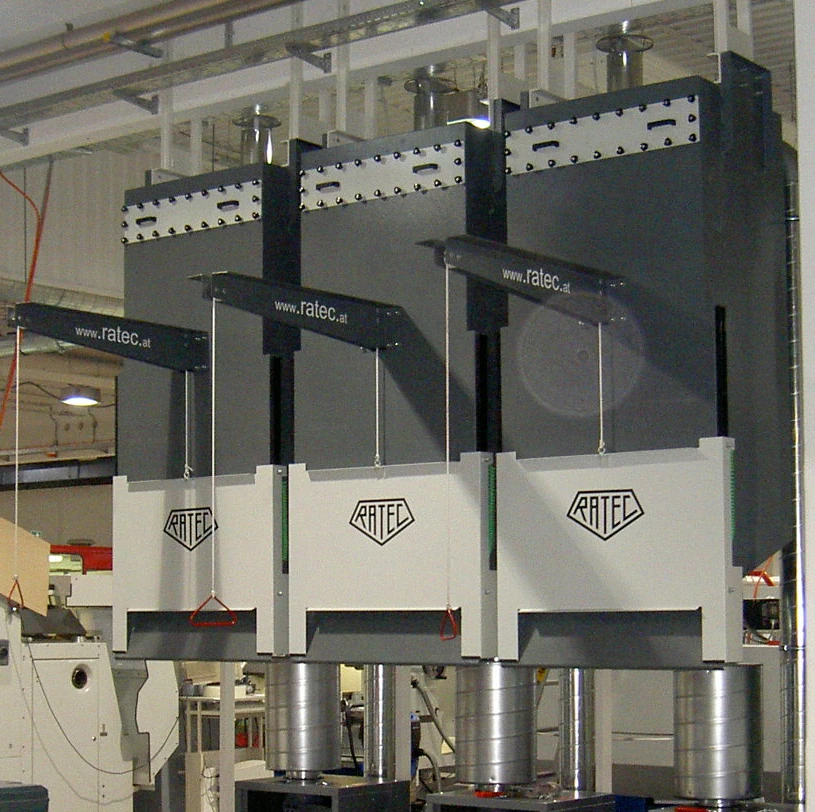
| Separation | Three separation containers, one container per machine |
| Fill-level control | Large viewing windows |
| Disposal | Directly into on-site baling press |
| Grounding | All parts conductively connected, grounding lugs for main grounding |
Your benefits
- Unobstructed Processing: No chips wrapping around the tool or workpiece.
- Sorted Separation: One container per machine, ideal for recycling.
- Simple Disposal: Chips go directly into the baling press.
- Safe Operation: Continuous grounding to prevent electrostatic charging.
Transferable to Your Application
The principle is applicable wherever long or bulky chips are produced, such as during the turning, milling, or drilling of plastics. We reconfigure the number of machines, container size, fan, and disposal system for every project. Another practical project is paper strip extraction. For larger operations with many extraction points, we also design central vacuum systems.
Complete solution from a single source
From consulting and planning to technical design, manufacturing, assembly, and commissioning: RATEC handles the entire process. You can find more about our approach under Extraction Systems. We manufacture in our own plant in Carinthia, certified according to ISO 9001, EN 1090-1, and ISO 3834-2.
Do You Have Disruptive Chips?
Tell us about your machines, material, and chip volume. We will get back to you with a specific proposal.